Probya: a scanner that tells women what’s in their intimate care products
Case study · Women’s health
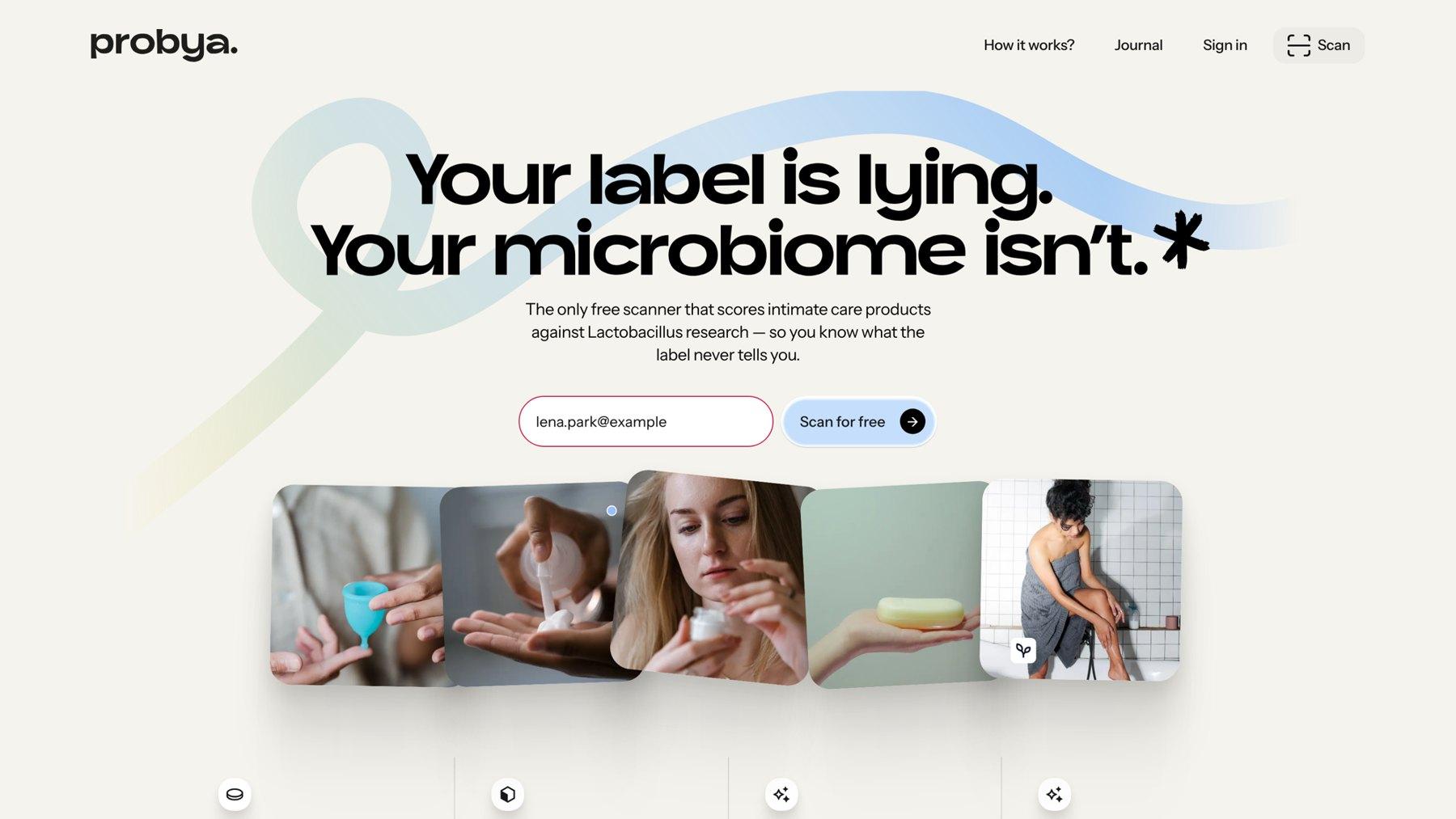
Probya is a women’s health brand built around the vaginal microbiome. Its founder, Samira Masri, wanted a free app where someone scans the barcode on a wash, a tampon or a lubricant and sees what published research says about every ingredient.
She came to us with Figma designs and a scoring method written with a scientist. She now has a working app with a barcode scanner, a 0 to 100 score for each product, and an admin side where her team checks the evidence before any score goes public.
- milestones since February 2026, one contract, still going
- 12milestones since February 2026, one contract, still going
- builds on one contract: the app, the Shopify store and the IVF guide site
- 3builds on one contract: the app, the Shopify store and the IVF guide site
- scores shown without a real study behind them
- 0scores shown without a real study behind them
“I really appreciate them helping me with my project as they are very skilled as well as quick with addressing my concerns.”
Where she started
Samira had the hard part done on paper. The screens were designed for phone and desktop, and the scoring method came from real research. What she didn’t have was software. Nobody could scan anything yet, there was no place for her team to add products or check studies, and the copy had to stay inside what a health brand is allowed to say.
Getting that wrong has a cost. One score published without a study behind it is a claim she couldn’t defend, on a product page with her name on it.
The problems we solved
- The designs showed a scanner, but nothing could read a barcode.
- The phone camera reads the barcode, or the shopper types the digits, and the product’s result opens.
- A score could have gone out with no study behind it.
- The app refuses any score without a real citation, so it can’t show one.
- Products with too little research would still get a number.
- A product needs most of its ingredients backed by research. Below that, it says “Not enough data” instead of guessing.
- Wording could drift back to claims that legal review had removed.
- Automated tests read the app’s text and fail if a banned phrase comes back.
- Her team had no way to add products or check evidence.
- An admin dashboard where AI drafts each ingredient’s evidence and a person approves it before it counts.
- Visitors could be tracked before saying yes.
- Analytics only start after someone accepts cookies.
What they can do now
A shopper can scan a product in a store aisle, see its score, read why each ingredient lifted or lowered it, and open the study behind it. Guests get one free scan, and if they save a product, they can sign up, confirm their email and come back to find it already saved.
Samira’s team can add a product from its ingredient label, approve evidence one ingredient at a time, and record who owns each product photo before it’s shown.
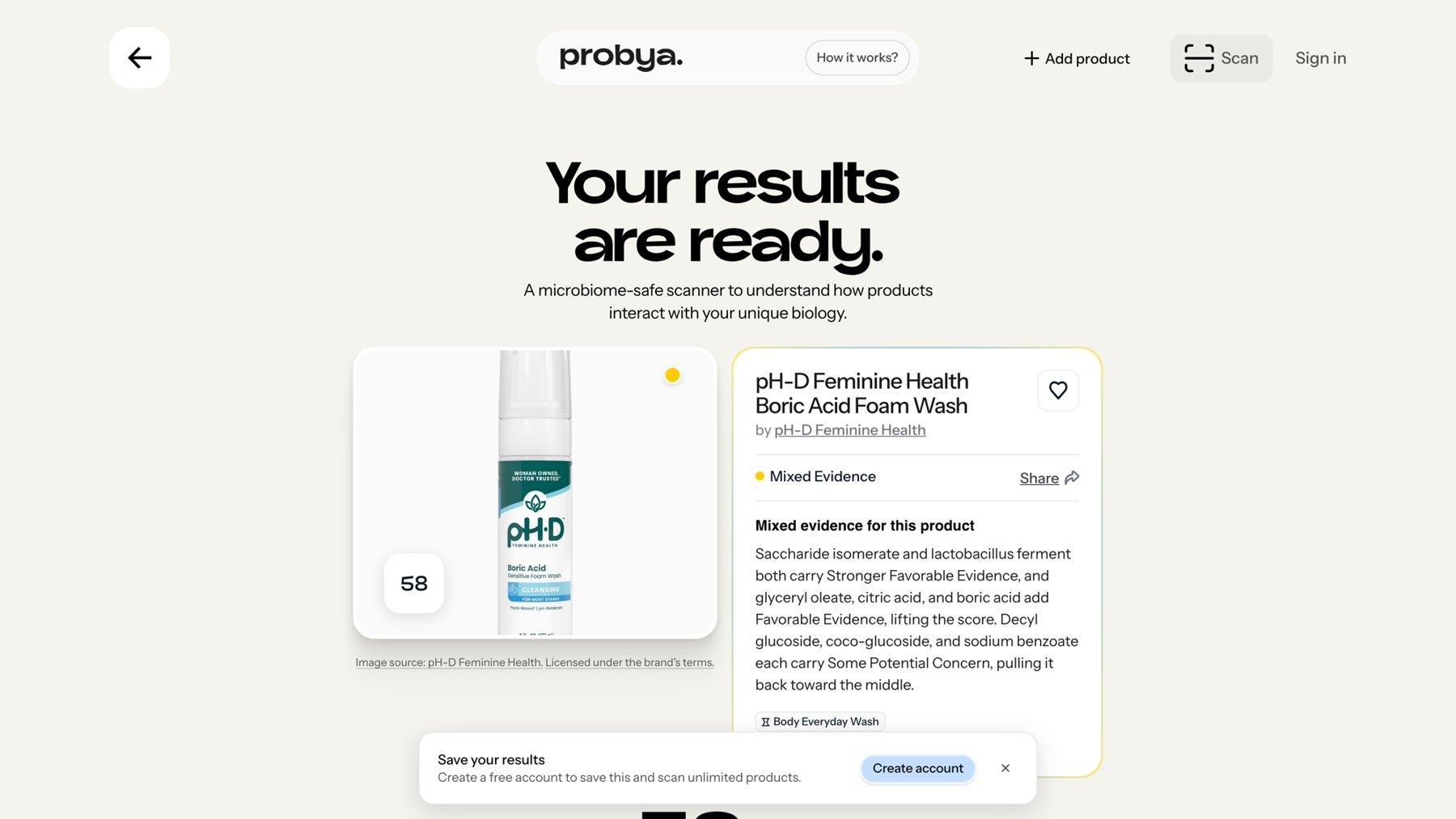
A scanned product, its score, and the evidence behind it. 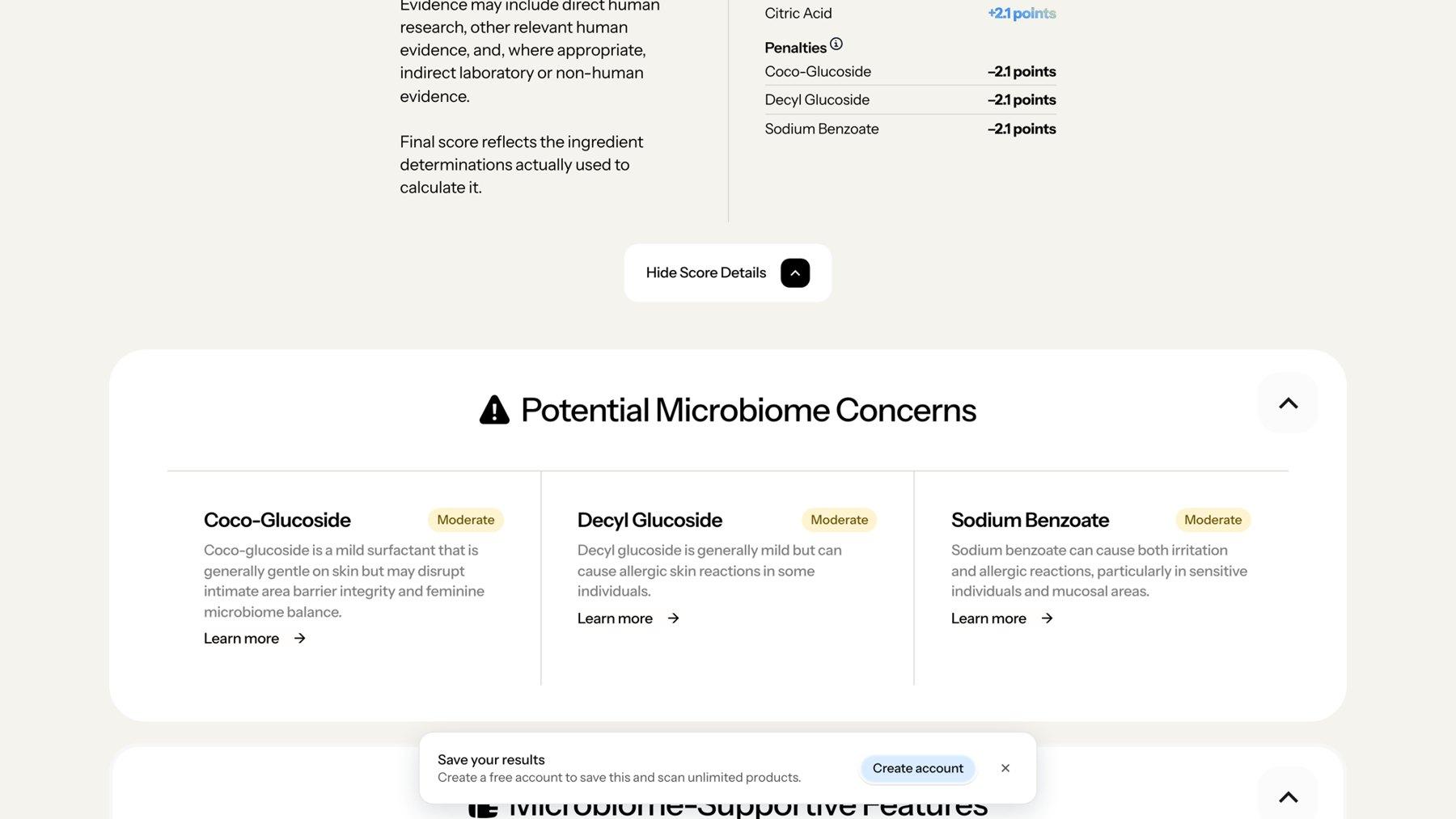
Each flagged ingredient, with how much it matters and why. 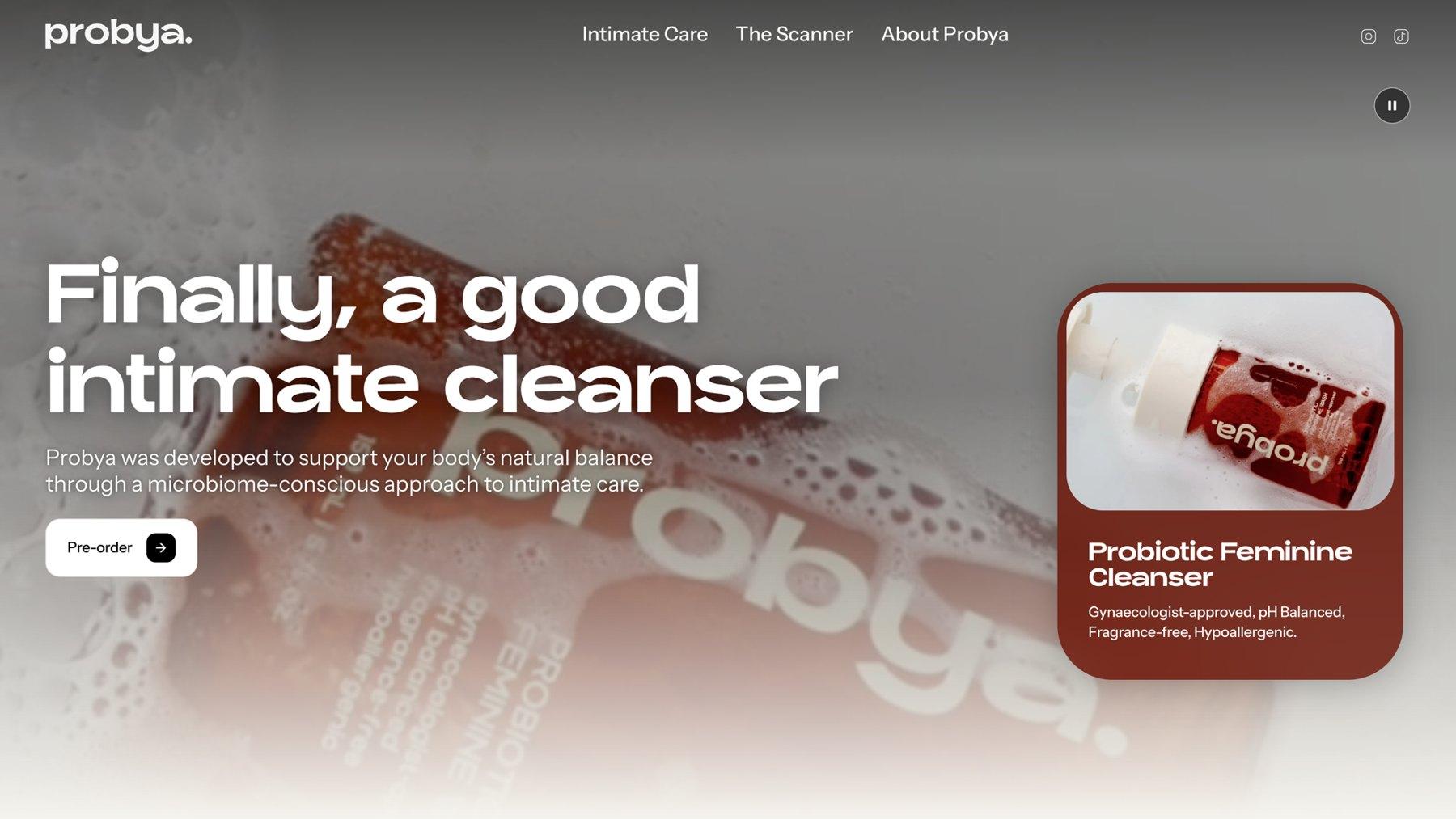
The store, live before the first product was ready.
How we worked
Paid milestones, each one on a preview link Samira checked before it went live, with everything in Probya’s own accounts.
After launch
She kept us on. After the app we built Probya’s Shopify store. It went live before the cleanser was ready: every preorder button opens the waitlist today, and on launch day her team ticks one box and the same buttons add it to the cart.
Then we built her IVF guide site, all under the same contract, and we’re still working with her.
In their words
“Hijab and Ammar are very honest and hard workers and I’ve been working with them for months. I really appreciate them helping me with my project as they are very skilled as well as quick with addressing my concerns. I will be getting their assistance for my other projects as well. Grateful for their expertise!”
Is this realistic for you?
Samira started with finished designs and a clear method, which fits founders who know exactly what they want but have no developer. How long a build takes depends on what’s already there, whether that’s a design, a demo or a half finished app.
The $350 audit tells you in 3 working days what yours needs, with one fixed price. It isn’t for native mobile apps, or for founders who want us to find their customers.